February 24th 2026
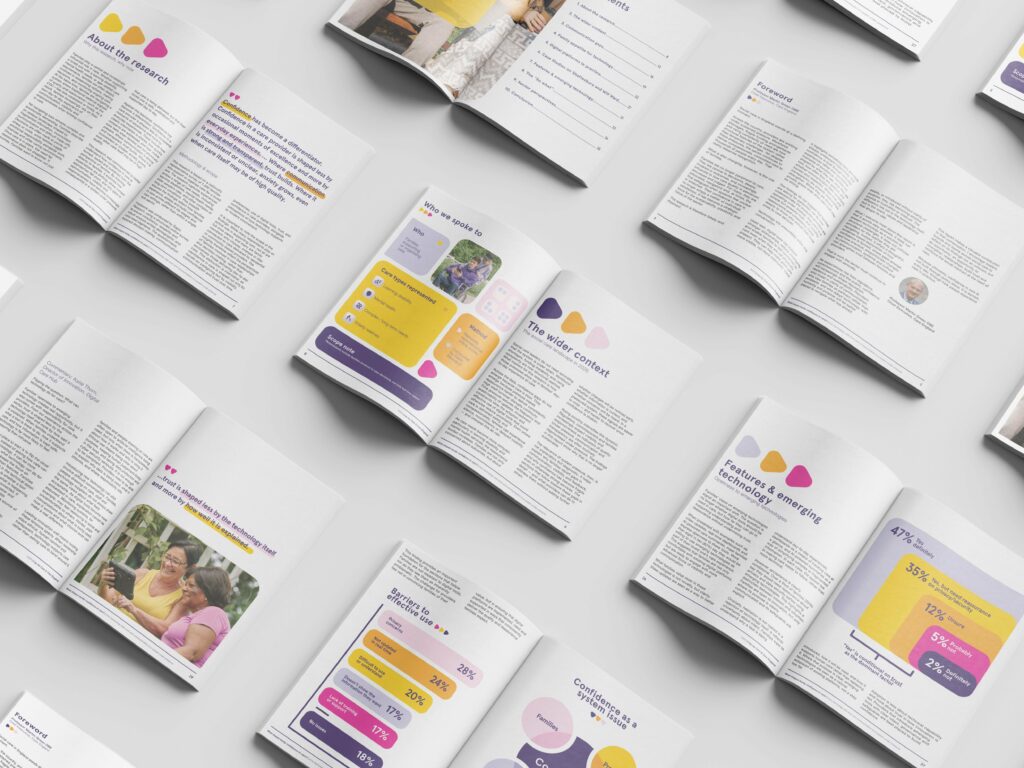
The Digital Care Hub is pleased to contribute to What shapes family confidence in care?, a new research report from Log my Care in partnership with Care England.
The report explores what influences family confidence in care services, drawing on research into communication, transparency and the growing role of digital tools. It examines how families view emerging technology, including artificial intelligence and monitoring systems, and highlights the importance of reassurance around privacy and data protection. The report shows that families are often open to innovation, but confidence depends on how it is introduced and explained.
Our contribution focuses on what this means for digital maturity, leadership and ethical adoption across adult social care.
Digital maturity is about leadership
Across the sector, we are hearing a consistent message. Digital maturity is no longer mainly about the technology itself. It is about leadership.
Families are increasingly open to digital and emerging tools. In many cases, they expect services to use secure systems that improve communication and make information easier to access. However, openness does not automatically lead to confidence. What makes the difference is how carefully tools are introduced, how clearly they are explained and how strongly they are governed.
Trust is shaped less by technical features and more by behaviour. When leaders take time to explain what a system is for, how it supports good care and how information is kept safe, technology is far more likely to feel reassuring. When explanations are unclear or overly technical, uncertainty grows.
As Katie Thorn from the Digital Care Hub explains:
“Digital maturity is increasingly about leadership, not technology. Families may be open to emerging tools, but their confidence depends on whether those tools are introduced thoughtfully, governed well and explained clearly. The way leaders communicate about technology plays a central role in building trust.”
Digital-first ways of working are becoming essential
The research also reflects a practical shift. Digital-first ways of working are becoming necessary to run a sustainable care service.
As information is shared more routinely across health and social care, paper-based or disconnected systems are increasingly difficult to maintain. Expectations around transparency, partnership working and timely communication continue to grow. Interoperability is moving from being an aspiration to being essential.
For care leaders, this means digital capability cannot be treated as something optional or left for later. It needs to be part of business planning, workforce development and long-term sustainability. That does not require adopting every new tool. It requires thoughtful decisions about what genuinely supports staff and improves care, and ensuring strong foundations are in place.
Data protection, cyber security and confidence
Encouragingly, awareness of data protection and cyber security continues to improve across the sector.
More providers now recognise that good digital practice underpins trust. Engagement with the Data Security and Protection Toolkit is increasing. Cyber risk is discussed more openly at senior levels. Leaders are more confident explaining how data is protected, who has access to it and why it is used. In a climate of increasing scrutiny, that confidence really matters.
Families want reassurance about privacy and accountability. They want to understand how information is handled and where responsibility sits. When leaders can answer those questions calmly and clearly, it signals organisational maturity.
Clarity, honesty and bringing people with you
In organisations that feel digitally mature, conversations about technology are grounded and practical. Leaders talk about how systems help staff manage workload, how they support care and where their limits lie. There is less emphasis on novelty and more on purpose.
Being honest about what systems do not do is just as important as explaining what they do, particularly when monitoring tools or data sharing arrangements are involved. Clear boundaries help maintain trust.
Most importantly, digital change only works when people are brought with you. Staff need time and support to build confidence. Without that, even well-chosen systems can create frustration. People drawing on care and their families need plain, straightforward explanations they can trust.
Digital maturity is not about racing ahead. It is about being ready, being honest and leading change in a way that keeps care human.
Access the full report: What influences families confidence in care?
View all News