November 24th 2026
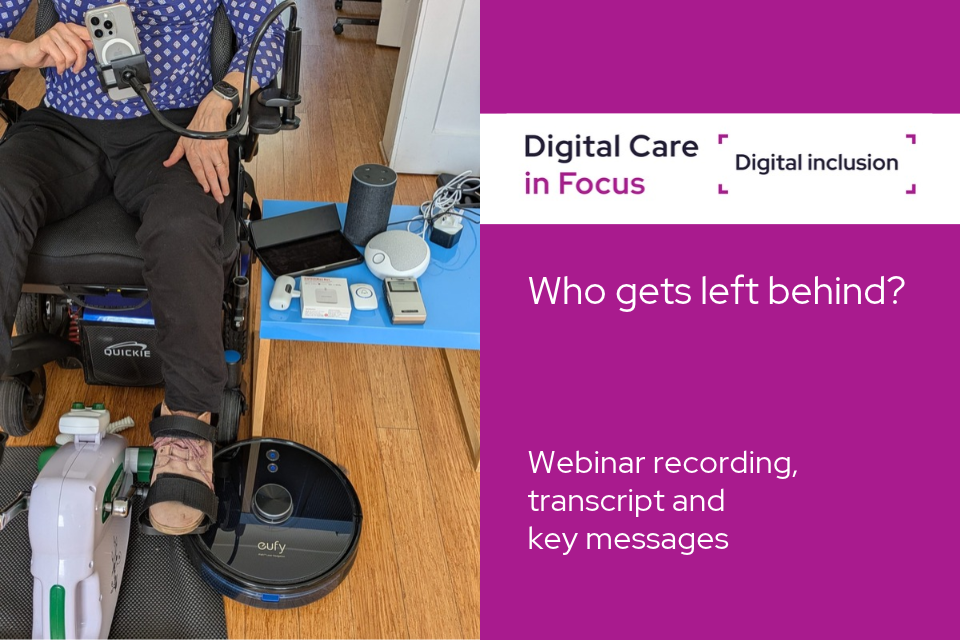
Catch up with our latest Digital Care in Focus webinar, Digital inclusion in care: Who gets left behind? The recording, transcript and useful resources are now available.
Held on 19 November 2026, the discussion explored how technology can open up opportunities in social care—and leave people behind when the right support is missing.
The panel explored why digital inclusion needs to be built in from the outset, not added after technology has been introduced.
Bringing different experiences together
Fiona Flory, Engagement Manager at Digital Care Hub, chaired the conversation with Caroline Waugh, a member of Think Local Act Personal’s National Co-production Advisory Group; care worker Sophie Tracey; Lauren Cummins, Independent Living and Digital Coordinator at Middlesbrough Council; and Jo Reynolds, Research and Evaluation Manager at Good Things Foundation.
They discussed affording data, finding accessible devices, building confidence and knowing where to turn when something goes wrong, alongside examples of support shaped around people’s interests and needs.
More independence, not just more technology
Caroline described how technology and support from her personal assistant help her live independently. Without them, she would need much more help:
“I’d need somebody to remind me of my medication, I’d need someone to open and close the curtains.” Reflecting on the difference technology has made, she added: “It’s just mind-blowing, the difference it’s made”.
Lauren shared how Middlesbrough’s Rekindle service helps people build skills, access suitable devices and get connected. From online shopping to family history, animation and making art, starting with something people want to do can make learning less daunting.
Care workers need support too
Sophie spoke about using a personal phone for work: running down data and batteries, losing access to care information when the signal drops, and being expected to learn unfamiliar systems without enough training because she was young.
Her experience challenged assumptions about who needs help. Age, employment or owning a phone tell us little about digital skills or affordability. Being comfortable online today doesn’t mean someone won’t need support tomorrow.
As Jo explained: “It’s not just the tech, or the skills, but it’s kind of having critical knowledge about safety, how to keep yourself safe online.” The panel discussed managing scams and privacy risks without putting people off using technology.
Watch, read and share
The webinar page brings together resources including the Minimum Digital Living Standard, Skills for Care’s Digital Skills Framework and guidance for digital champions.
Share with colleagues and consider where ongoing support could make a difference in your service.
Watch the webinar and access the transcript and useful links.
View all News