August 19th 2026
Adult social care providers have until 30 September 2026 (date correct as of 10/9/26) to prepare for the reasonable adjustment digital flag.
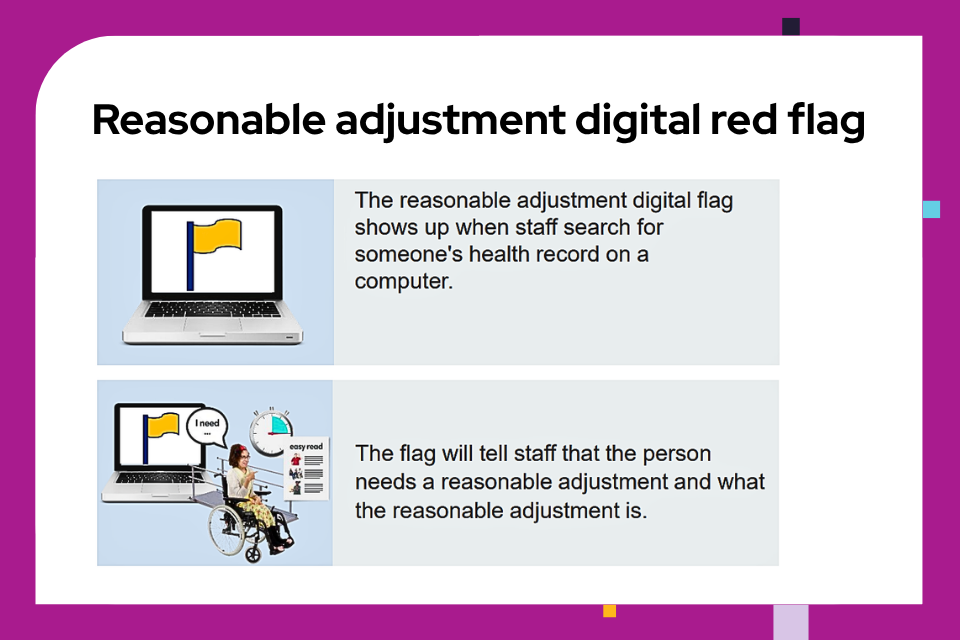
The flag will help health and care services identify, record, view and share the reasonable adjustments a disabled person needs, so people do not have to repeat the same information each time they use a service.
What is the reasonable adjustment digital flag?
The reasonable adjustment digital flag is a visible marker on a person’s national health and care record. It shows that they may need adjustments when they use publicly funded health or social care services.
This might include information about communication needs, accessible formats, extra time for appointments, support from a carer or advocate, a quieter space, or other adjustments that help the person access care.
Why it matters
For many people drawing on care and support, reasonable adjustments can make the difference between a service that works for them and one that does not.
For providers, the flag is not only a digital change. It affects care planning, records, consent, information sharing, staff training and partnership working with health services.
Katie Thorn, Director of Innovation at Digital Care Hub, said:
“Used well, the reasonable adjustment digital flag could make a real difference to people’s experience of care. It can help staff access important information sooner, respond to people’s needs more consistently and reduce the need for people to repeatedly explain the adjustments they require. Care providers should take the opportunity to prepare thoughtfully, so the flag becomes part of everyday good practice.”
What providers need to consider
Providers should review how they identify, record, review and share information about reasonable adjustments, and whether staff know how to act on that information.
- Update policies in line with the reasonable adjustment digital flag information standard.
- Agree how staff will identify disabled people who may need reasonable adjustments, including when someone first starts using a service.
- Set out how disability and reasonable adjustment information will be recorded, shared, reviewed and updated.
- Make this information highly visible to staff, including through a local flag or alert where available.
- Check readiness for future digital integrations, including how local systems may connect with national services.
- Provide staff training and briefings. National training is available through the short Reasonable Adjustment Digital Flag e-learning module.
What providers should do now
The work to prepare for the RADF is likely to involve different people across your organisation. A good first step is to turn the checklist into a simple plan.
- Nominate a lead and agree who else needs to be involved, including digital, care planning, data protection and training leads.
- Involve people drawing on care, families and carers so your approach reflects what good support looks like in practice.
- Compare current practice with the NHS England checklist, so you can see what already works and where changes are needed.
- Speak to your care record supplier about local flags or alerts and future integration requirements.
- Plan staff briefings and make sure relevant staff know about the Reasonable Adjustment Digital Flag e-learning module.
Find out more
Read the NHS England guidance on the reasonable adjustment digital flag and the NHS England action checklist for providers.
For further queries please contact the Reasonable Adjustment Digital Flag team on: [email protected]
Initially published 19th August 2026, updated 10th September 2026
View all News